Hindu Scholars in the Interreligious Chaplaincy Program
Chaplains are unique leaders who provide spiritual support to people in various settings, including hospitals, military bases, universities, and prisons. They work with vulnerable communities and promote a sense of interconnectedness that reduces feelings of isolation and separation. In addition, chaplains play an essential role in building bridges among communities.
The United States has witnessed increased racially and religiously motivated hatred and discrimination. Chaplains are uniquely positioned to address issues of social justice and inequality, advocate the rights of marginalized groups, and promote inclusiveness within the institutions they serve. For example, prison chaplains promote rehabilitation and work to reduce recidivism by advocating for inmates' education and job training programs. Healthcare chaplains advocate for patients' rights and access to quality healthcare, regardless of background or socioeconomic status.
Our graduates have the opportunity to serve as bridge builders and connect communities by promoting mutual respect and cooperation.
In the Graduate Theological Union's Interreligious Chaplaincy Program (ICP), we began training Hindu chaplains in 2021. We teach how to listen to and support people with different religious beliefs, cultural traditions, and life experiences, all in an interreligious environment that facilitates dialogue and builds understanding among diverse communities. As a result, our graduates have the opportunity to serve as bridge builders and connect communities by promoting mutual respect and cooperation.
Chaplains are vital ambassadors promoting tolerance, acceptance, harmony, and world peace in the United States and abroad. Some ways in which Hindu chaplains are able to create a more connected and equitable society include: (1) Encouraging interfaith collaboration through dialogue, understanding, and respect for different beliefs and practices; (2) teaching Hindu principles of non-violence, compassion, and unity to help diverse people find inner peace and happiness; (3) promoting social justice by addressing inequality, discrimination, and violence and empower their institutions to adopt policies and practices that promote equality and justice, support marginalized communities, and address the root causes of conflict and violence; (4) modeling world peace to avoid importing conflict and violence.
These spiritual care providers help break down barriers to build bridges of understanding, compassion, and empathy among diverse backgrounds.
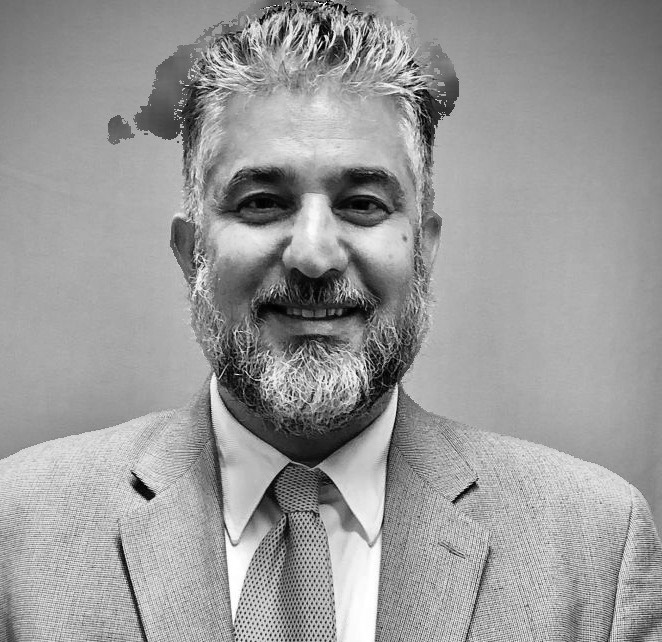
Dr. Kamal Abu-ShamsiehThe collaborative work of our chaplains has the potential to build bridges among communities through understanding, inclusion, and social justice. These spiritual care providers help break down barriers to build bridges of understanding, compassion, and empathy among diverse backgrounds. Their work affords opportunities to highlight universal values that transcend religions and cultures to reduce feelings of isolation and separation and create a more equitable and interconnected society.
America's Hindu population has been steadily rising making Hinduism the fourth-largest faith in the United States. The Hindu community is now actively engaged in all walks of professional sectors in the U.S., including chaplaincy. In Hindu traditions, the goal is to understand the nature of the self, thereby allowing humans to remain at peace despite life's many agitations. Hinduism's most widely read scripture, the Bhagavad Gita, the teachings of Sri Krishna, can help individuals face grief and loss with fortitude.
As the United States becomes more religiously diverse and pluralistic, it may be a challenge for chaplains to successfully minister to those of other faiths. The Hindu teaching ekam sad vipra bahudhā vadanty (Rig Veda 1.164.46) "Truth is One, Paths (Descriptions) are Many," provides a natural freedom for Hindu chaplains to easily incorporate different religious beliefs and traditions when providing spiritual care.
Hinduism comprises multiple sampradayas (religious traditions) and emphasizes respect for this diversity. Because Hindu chaplains have a pluralistic cultural heritage, they are able to remain open minded in an interreligious environment. In addition, Hinduism's core emphasis on service (seva) enables the practitioner to meet others' needs selflessly.
Dr. Kamal Abu-Shamsieh, Ph.D.
Prof. Kamal Abu-Shamsieh is the Director of the Interreligious Chaplaincy Program (ICP) at the Graduate Theological Union (GTU), Berkeley, CA. He holds a Ph.D. degree from GTU and has wide experience in the study and teaching of chaplaincy. He has also been instrumental in establishing the HCI-GTU pathway to Hindu interreligious chaplaincy studies.