Psychedelics & Chaplaincy: A Reemerging Path to Healing

Many have claimed that Western society is in the midst of a psychedelic renaissance. Indeed, with the exception of ceremonial tradition, what was once pushed underground due to legal concerns within the U.S. is now reemerging as a potential legitimate pathway for healing, especially for physical and psychological distress, addiction, and treatment resistant mental health concerns. With this evolution, an opportunity emerges for Hindu chaplains and other spiritual care providers. Psychedelic chaplaincy offers a potential bridge between spiritual care and psychedelic-assisted therapy, where spiritual care providers can play a unique role in supporting individuals through transformative healing experiences.
Psychedelics and Chaplaincy
Psychedelics are a category of natural and synthetic compounds that induce varied effects on the psychological, emotional, and physical systems of the body. Psychedelics undoubtedly have reemerged into the collective psyche with varied historical references, some good and some less than optimal. From the psychedelic countercultural movement of the American 1960s, to the sacred shamanic spiritual journeys of multiple cultures throughout history, psychedelics have consistently played a role in transformation, through altered states of reality and the opening of doorways to new worlds of perception and understanding.
Substances that typically fall within this category of compounds (both synthetic and naturally derived) include psilocybin, also known as magic mushrooms, mescaline, a naturally occurring compound found in cacti, lab produced MDMA, previously known as ecstasy or "molly," ketamine, LSD, and naturally occurring DMT and ayahuasca. Although the new field of psychedelic chaplaincy is still in its relative infancy, it typically refers to certified individuals providing spiritual care and ethical meaning-making support for those undergoing psychedelic therapies. This emerging practice addresses deep spiritual and existential dimensions that often arise during psychedelic experiences, of which well-trained spiritual care providers may be uniquely positioned to understand and support.
Chaplains engaged in this type of work often exist outside mainstream religious/spiritual institutions and provide care for people with diverse spiritual needs and beliefs.
Chaplains engaged in this type of work often exist outside mainstream religious/spiritual institutions and provide care for people with diverse spiritual needs and beliefs. They think and reflect theologically, using that understanding to attend to suffering in ways that honor both wisdom and contemporary healing.
Evidence Base and Hindu Perspectives
Current research suggests that psychedelic journeys can induce mystical experiences that have the potential to positively mediate therapeutic outcomes for participants. For Hindu chaplains, these findings may sound reminiscent of altered states of consciousness gained through deep meditative practices. While psychedelic therapies have been touted as a bridge to healing for the most difficult circumstances of life, and a door to higher levels of awareness of the Self, this should not necessarily be considered equivalent to experiences found through dhyana, but perhaps an alternate process that works towards an often-similar outcome of self-realization, understanding, healing, and communion with the personal and sacred divine.
Chaplains in this field also frequently operate as a part of a broader team, where a spiritual care provider, care seeker, and medical/mental health practitioner work together, each addressing components within their specific domain and scope to support the care recipient. Naturally, well-trained spiritual care providers are uniquely qualified to support clients/patients undergoing treatment, where spiritual meaning making, existential concerns, or simple compassionate presence and "holding the space" are desired.
Why Hindu Chaplains Are Uniquely Qualified
- Consciousness Traditions: Hindu traditions offer frameworks for understanding altered states, ranging from samadhi to meditation-induced consciousness shifts, providing natural preparation for supporting individuals in psychedelic states.
- Sacred Presence: Hindu chaplains understand sacred compassionate presence as seva, selfless service in times of vulnerability, thus bringing experience with grief, pain, and life transitions to care recipients.
Critical Legal and Training Imperatives
- Legal Reality: While psychedelics are becoming more accessible through a legal patchwork of state-level reforms within the US, most psychedelics remain federally controlled substances. Within the United States, legal opportunities for practice currently exist only in FDA-approved clinical trials, ketamine-assisted therapy, and integration support for experiences in legal ceremonial contexts. When practicing outside of the U.S., country specific regulations and legal frameworks vary widely and should be closely monitored and adhered.
- Training Requirements: Psychedelic chaplaincy demands additional specialized training beyond basic chaplaincy certification. It is imperative that no one should attempt this work without proper preparation and knowledge.
- Ethical Obligations: Chaplains must approach this work with ahimsa (non-harm), ensuring proper training, legal compliance, and ethical practice standards.
Training and Current Applications
While this field is rapidly evolving, limited training opportunities are available through academic and research institutions.
Psychedelic chaplains currently work in several contexts: FDA-approved clinical research at institutions like Johns Hopkins and Emory University; cancer care helping terminal patients process existential concerns; addiction treatment supporting spiritual awakenings in recovery; PTSD and trauma processing; end-of-life care for existential distress; and integration support in states with decriminalized psychedelics.
New Horizons
For Hindu chaplains and those in training, this field offers an opportunity to apply spiritual principles of consciousness and healing where spiritual dimensions are a central area of focus, rather than marginalized. However, this sacred work demands rigorous preparation, legal awareness, and advanced training beyond foundational chaplaincy education. The intersection of ancient Hindu wisdom with reemerging therapeutic approaches creates unique opportunities for spiritual care providers to serve in ways honoring both scientific rigor and sacred dimensions of consciousness.
Editor's Note: This article should be used as general interest information only. HSCI does not endorse psychedelic work or a particular therapeutic model. Chaplains interested in Psychedelic Chaplaincy should ensure that they obtain the right experience and training. Proceed with wisdom, proper training, the highest ethical standards, and deep respect for this sacred healing work, in consultation with experienced practitioners and researchers. Similarly, care-seekers interested in Psychedelics should consult with experienced participants to determine if Psychedelics is appropriate in their context.
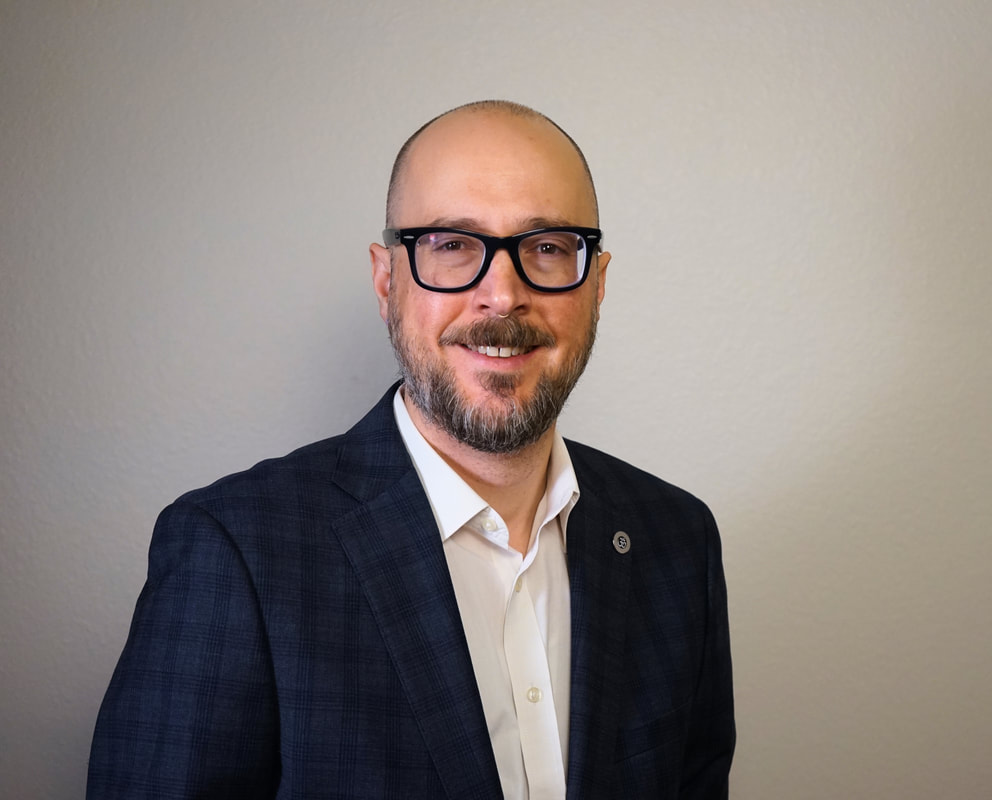
Zachary Ginder, PsyD
Zachary Ginder blends Hindu wisdom and psychology to foster wellness in workplaces and families, guiding with deep meditation and a Doctor of Psychology degree. He leads Pine Siskin Consulting and directs an autism center.